
On projects where I led Commerce Cloud and Order Management delivery, orders came from two directions: sales reps quoting in Salesforce CPQ, and customers buying on a B2B Commerce storefront. The business wanted one fulfillment process for both. The architecture that made that work is simple to describe and needs discipline to build.
One product and price truth
CPQ and B2B Commerce must sell the same catalogue. Keep products, bundles and pricing rules defined once, and make sure storefront prices and CPQ prices for the same account agree. Most "why is this order different?" issues trace back to two pricing sources drifting apart.
Two entry points, one order
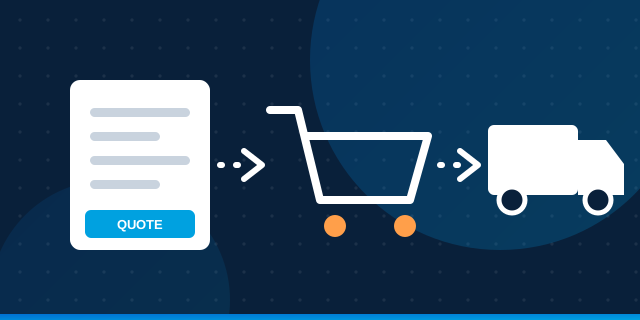
- CPQ path: an approved quote is ordered, which creates a standard Order with order products.
- Commerce path: checkout on the storefront creates an Order for the buyer's account.
Either way, the result is a standard Order. That common shape is what lets Order Management treat both the same.
Into Order Management
- Once the Order is activated, an Order Summary is created. It becomes the record of truth for the order's lifecycle.
- Routing creates Fulfillment Orders, deciding where each item ships from based on your business rules.
- Fulfillment, invoicing, cancellations and returns all happen against the Order Summary, so the customer and service teams see one consistent story.
Design decisions that matter
- Decide where approvals live. Approve discounts in CPQ before ordering, not after the order reaches OMS.
- Make the hand-off idempotent. The step that creates Order Summaries should be safe to retry without creating duplicates.
- Map statuses deliberately across quote, order, order summary and fulfillment, so reports and customer notifications stay consistent.
- Test the unhappy paths, such as partial shipments, cancellations and returns, as thoroughly as the happy path.